Short answer
Keep the damper shut, close the glass doors or set a heavy screen in place, and keep people and pets out of the room. Never light a fire to smoke an animal out or try to trap it yourself. A professional removes raccoons and squirrels before the flue is capped; chimney swifts are protected by federal law and stay until they migrate.
Why Wildlife Moves Into Somerset Hills Chimneys
Many Somerset Hills houses sit very close to good animal habitat. New Jersey Audubon's Scherman Hoffman Wildlife Sanctuary sits off Hardscrabble Road in Bernardsville, and the Great Swamp National Wildlife Refuge lies just east of Basking Ridge. The refuge's mammal list, published by the U.S. Fish and Wildlife Service, describes raccoons as very numerous, gray squirrels as very common in upland hardwoods and southern flying squirrels as fairly common but seldom seen by day. Add the wooded lots around Bernardsville Mountain, Mendham and Far Hills, and most chimneys in the area have neighbors that are always looking for a dry, sheltered den.
To those animals a masonry flue is a hollow tree with a roof over it. The older houses here make the invitation larger. Estate chimneys often carry several flues, and the ones serving a guest wing, a pool house or a fireplace nobody lights can sit quiet for years. An uncapped flue, a cap knocked loose by a falling limb or a screen rusted through is all it takes.
The usual signs are scratching or thumping behind the damper, chirping or chattering from inside the flue, twigs, leaves or droppings landing in the firebox, and a musty smell from the fireplace.
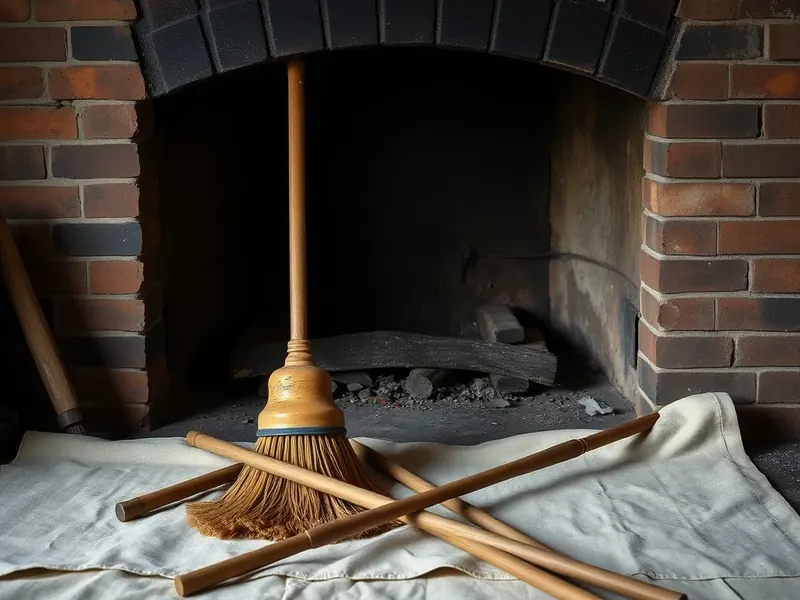
First Steps When Something Is Moving in the Flue
The goal for the first hour is simple: keep the animal in the chimney and out of the house, and keep people and pets away from it.
- Keep the damper shut and close the glass doors or set a heavy screen firmly in place. Do not open the damper to look up, because a raccoon or squirrel resting on the smoke shelf can drop straight into the room.
- Close off the room and keep children and pets out of it.
- Listen and note the timing. Noise at night points to a raccoon or a flying squirrel, scrabbling in daylight usually to a gray squirrel, and high-pitched chattering in summer often to chimney swift chicks.
- Check the top from the yard. With binoculars or a phone camera's zoom, see whether the cap is missing, bent or torn. Stay off the roof.
- Mention every appliance on that chimney when you call. In many older Somerset Hills houses a boiler or water heater shares the stack with the fireplace, and a nest in its flue can push carbon monoxide into the house.
Do not try to grab, corner or trap the animal yourself. The New Jersey Department of Health identifies the raccoon as the animal that spreads rabies to other land animals in the state, and a cornered raccoon or a frightened squirrel will bite. If a carbon monoxide alarm sounds at any point, get everyone outside and call 911 first.
Why Lighting a Fire to Smoke Them Out Backfires
It is the most common bad idea, and it fails in several ways at once.
- The smoke has nowhere to go. A nest or a wedged animal blocks the flue, which is why the Chimney Safety Institute of America lists animal and bird nests among the obstructions that send toxic gases back into a house. Smoke and carbon monoxide pour into the room instead of rising.
- The nest is kindling. Dry twigs, leaves and nesting material packed into a flue catch fire easily, right where creosote collects on the flue walls.
- The young cannot get out. From spring into summer, a raccoon in a chimney is often a mother with a litter on the smoke shelf. New Jersey's wildlife relocation policy expects anyone relocating adult animals in spring and summer to search for their young and move them together. Young that cannot climb yet are trapped by the heat, and an animal that dies in the flue leaves a second blockage and a lasting smell.
- It can break federal law. If the birds are chimney swifts, harming them, their eggs or their nest violates the Migratory Bird Treaty Act.
Leave the fireplace and any stove on that chimney cold until the animals are out and the flue has been cleared and checked.
Raccoons and Squirrels: Out First, Then Sealed
Raccoons often pick the smoke shelf, the ledge just above the damper, as a den, and in spring a female may be looking for a place to raise her young. New Jersey's Division of Fish and Wildlife favors fixing the cause, such as capping the chimney, so that animals can be released on site instead of being trapped and hauled away. It also limits where raccoons may be released, because the state classes them as a rabies vector species. That is work for a wildlife professional or a chimney pro equipped for it, not for a homeowner with a flashlight.
Squirrels that drop into a flue often cannot climb back out, especially from a smooth metal liner; the U.S. Fish and Wildlife Service makes the same point about birds and other wildlife getting trapped in metal-lined chimneys.
Whatever the animal, the order of the work stays the same:
- Make sure every animal, young included, is out of the chimney.
- Remove the nesting material and droppings. Raccoon droppings can carry raccoon roundworm, a parasite the CDC describes as rare in people but able to affect the eyes, organs and brain, so leave this cleanup to someone equipped for it.
- Sweep the flue and look at it closely. Nesting debris often sits well below what anyone can see from the hearth, and a chimney inspection with a camera shows whether the liner and damper came through intact.
- Close the opening with a sturdy cap, and never before step 1 is finished.
Chimney Swifts: The Birds You Have to Wait Out
Chimney swifts are small, dark, fast-flying birds that roost and nest inside chimneys. According to the U.S. Fish and Wildlife Service, they arrive in the United States in March or April, build a small half-saucer nest of twigs glued to the inner wall of the chimney with their own saliva, and leave for South America in August or September. The species is protected under the Migratory Bird Treaty Act, so harassing, injuring or killing swifts, their eggs or their nests is illegal, and the Service lists the chimney swift as a Bird of Conservation Concern.
In practice that means waiting. If swifts are nesting, keep the damper closed and leave that fireplace unused until they have gone. The loud food-begging calls of the chicks last only about three weeks in late spring and summer, and then it falls quiet. The Service's advice to swift hosts is to have the chimney cleaned in the months the birds are away, roughly September or October through March or April, and to call a licensed migratory bird rehabilitator if a nestling falls into the firebox. Its article On the Wing with Chimney Swifts covers the details.
Most other native birds are protected by the same law. A few introduced species, including European starlings, house sparrows and rock pigeons, are not, but nobody can tell from the hearth which bird built a nest, so have it identified before anything is removed. Bats sometimes roost in chimneys as well. Bats are protected by law in New Jersey, and the state's wildlife agency says bat exclusions should not be done in May, June or July, when young bats could be trapped inside.
Caps, Screens and the Chimney Swift Trade-Off
For raccoons, squirrels and most birds, the lasting fix is a well-built cap with a sturdy mesh screen, fastened firmly to the flue or the crown. On the large stone and brick chimneys of older Somerset Hills houses that often means one custom cap covering several flues of different sizes rather than single caps from a home center. The chimney cap and crown repair page explains the choices, and a good cap also keeps out rain and leaves and stops sparks from leaving the flue.
Timing matters. Early fall, after the swifts have left and before raccoons go looking for spring dens, is the natural window, and it lines up with the yearly sweep before the heating season. After any storm, look at the chimney top again from the yard: a cap bent or torn loose by a falling limb reopens the flue.
Bird lovers face a real trade-off. The Fish and Wildlife Service asks homeowners who want to help swifts not to cap their chimneys and never to line a chimney with metal, which is too slippery for swifts to cling to. It also says a chimney that already has a metal liner should be capped, because birds and other wildlife get trapped inside. For a fireplace or boiler flue that is in use, or one relined in stainless steel, a cap is the clear choice. An unused clay-lined flue on a large house is the one an owner might leave open for swifts, knowing it stays open to raccoons and squirrels too, and the yearly inspection is a good time to decide flue by flue.
When an Animal in the Chimney Cannot Wait
Most wildlife calls can be scheduled for the next day. A few cannot:
- A carbon monoxide alarm sounds, or smoke or fumes come into the house from a fireplace, boiler or water heater flue. Get everyone outside and call 911 first.
- An animal is loose in the house, or has reached the firebox behind doors or a screen that will not hold it.
- A nest or an animal is blocking a flue that the boiler or furnace needs during a cold snap.
- A storm has torn the cap off and something has already moved in.
1stCall Emergency Chimney answers 24/7 for those situations in Bernardsville and across the Somerset Hills, including Basking Ridge on the edge of the Great Swamp. The emergency chimney service covers trapped animals along with chimney fires, smoke in the house and storm damage. For the rest of the season's chimney care, start with the winter chimney checklist for Somerset Hills homes.