Signs a Chimney Fire Has Already Happened
Not every chimney fire is dramatic. Many burn briefly and quietly inside the flue, and homeowners find out weeks later, or never. Chimney fire damage repair starts with knowing whether a fire happened at all. If you burn wood in Bernardsville, watch for these signs after a very hot fire or a loud rumbling from the chimney:
- Puffy, honeycombed creosote flakes on the smoke shelf, in the firebox or on the roof.
- A cap or chimney top that is discolored or warped by heat.
- Cracked or collapsed flue tiles, or pieces of tile in the firebox.
- A damper that is warped or will not close properly.
- Cracks in the exterior masonry that were not there before.
- Roofing that looks scorched near the chimney, or smoke stains in the attic.
If you notice any of these, stop using the fireplace or stove and have the chimney checked. A single chimney fire can crack a clay liner and open a path for the next one to reach the wood framing around the chimney.
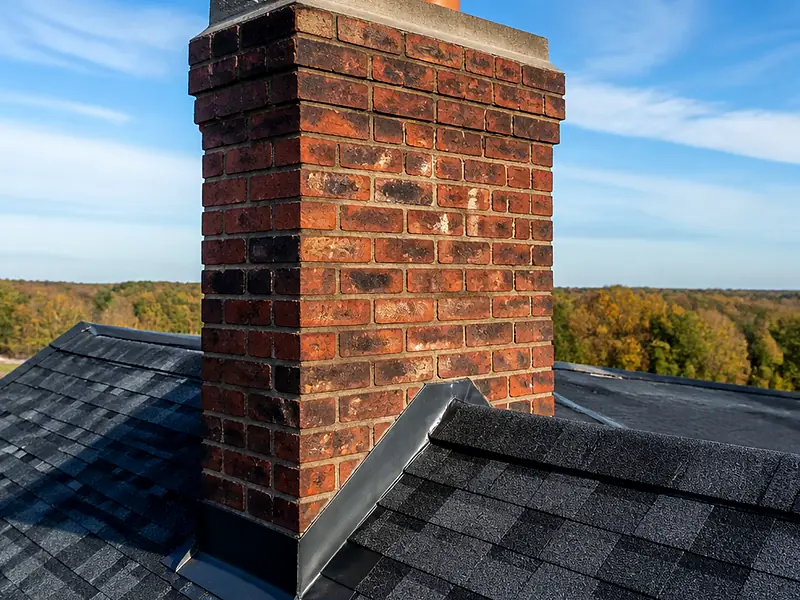
Why Chimney Fires Happen in Somerset Hills Homes
Chimney fires start when creosote, the tarry residue left by wood smoke, ignites inside the flue. Several local conditions raise the risk. Many Bernardsville households rely on fireplaces and wood stoves through long winters, and during extended outages, such as those after Superstorm Sandy and the October 2011 snowstorm, when thousands of homes in town lost power, fires often burn around the clock. Wood from limbs that came down in a storm is tempting to burn right away, but unseasoned wood produces far more creosote.
Tall exterior chimneys on older houses cool the smoke on its way up, and large flues that were never relined let smoke slow down and condense. Add a nest or a load of leaves at the top, and draft drops further. The U.S. Fire Administration urges homeowners to have chimneys cleaned and inspected every year, and a regular chimney sweep is the most direct way to keep creosote below the danger line.
Inspecting After a Fire: Camera Work and Level 2 Evaluation
NFPA 211 calls for a Level 2 inspection after a chimney fire. We run a video camera through the full length of the flue to look for cracked or displaced tiles, missing mortar, gaps at the joints and heat damage to any metal liner. We check the smoke chamber, damper and firebox, look at the chimney exterior and crown, and inspect accessible framing in the attic and around the chimney for scorching.
The result is a clear picture of the damage and a written plan for repairs. Some homeowners are surprised to find a badly cracked flue above a fireplace that looks perfectly fine; others learn that the damage is limited and a thorough cleaning is enough. Either way, you get an honest answer. On the multi-flue chimneys common in Bernardsville's older estate houses, we also check the neighboring flues, since heat and cracking can pass through the shared masonry walls between them.
Repair Options for a Fire-Damaged Flue
- Stainless steel relining. The most common repair. A UL 1777 listed liner is installed inside the damaged flue, restoring a safe, continuous passage for smoke. Our chimney liner page explains the options.
- Cast-in-place relining. A refractory material is formed inside the existing flue, sealing cracks and adding strength. It suits the irregular, oversized flues found in many older Bernardsville homes.
- Clay tile replacement. Damaged tiles are replaced, which can require opening the chimney wall.
- Resurfacing. For limited damage, a heat-resistant ceramic coating can fill gaps and small cracks in an otherwise sound clay liner.
- Masonry and damper repair. Cracked brick, a split crown or a warped damper are repaired or replaced as part of the job.
Every fire damage repair begins with a thorough cleaning to remove remaining creosote and ends with a final camera check so you can see the finished flue.
Insurance Claims and Documentation
Homeowners insurance often covers sudden damage from a chimney fire, but your insurer will want evidence. 1stCall Emergency Chimney documents fire damage with date-stamped photos, camera footage from inside the flue and a written report describing what was found and what repair is recommended. We can walk your adjuster through the findings and explain why a particular repair is needed.
If the fire happened at night, call us after the fire department leaves; our 24/7 emergency chimney service can secure the chimney and start the documentation right away. For homes in Bernardsville and nearby towns such as Basking Ridge, that means you are not left with an unusable fireplace and no answers in the coldest part of a Somerset Hills winter.