When a Chimney Liner Needs Replacing
A flue liner contains heat and combustion gases and carries them safely out of the house. Many older Bernardsville chimneys were built with clay tile liners, and some of the oldest have no liner at all, relying on the brick or stone itself. After a century of fires, freeze-thaw cycles and changing appliances, those flues crack, lose mortar at the joints, or simply stop being the right size. Signs that chimney liner installation may be needed include:
- Cracked, shifted or missing clay tiles visible on a camera inspection.
- A chimney fire, which can fracture tiles in minutes.
- A new boiler, furnace or water heater venting into an old flue.
- Persistent draft problems, smoke spillage or strong odors.
- Crumbling mortar or flakes of tile collecting on the smoke shelf.
- An unlined masonry flue, found in some of the oldest homes in the Somerset Hills.
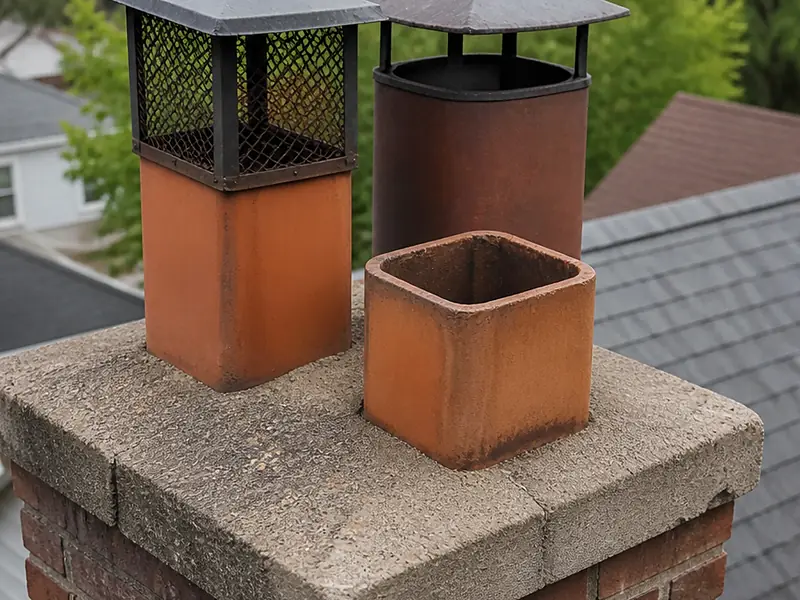
Relining for Boiler and Furnace Changes in New Jersey
Many relining projects in Bernardsville begin with a heating upgrade. When a fuel-fired appliance such as a boiler, furnace or water heater is replaced in New Jersey, the construction code process uses the state's chimney verification form to confirm that the chimney is in good repair, clear of obstructions, and appropriately lined and sized for the new equipment. If a liner is installed as part of the job, its documentation, including the manufacturer and UL listing, goes with the permit application.
That matters because newer, more efficient heating equipment sends cooler exhaust up the chimney than the old burners these flues were built for. In a large, unlined or oversized masonry flue, those cooler gases condense, and the acidic moisture eats away at mortar and tile. A properly sized stainless steel liner keeps exhaust moving and condensation under control. 1stCall Emergency Chimney works with your heating contractor so the liner is in place and documented before the new unit goes in.
Liner Options: Stainless Steel, Cast-in-Place and Clay Tile
- Stainless steel liners are the most common choice. Listed to UL 1777, they suit wood, oil and gas appliances when the correct alloy is selected, and they can be insulated to keep flue gases warm in the tall exterior chimneys found on many Bernardsville Mountain houses.
- Cast-in-place liners use a lightweight refractory mix poured or pumped around a form inside the existing flue. They work well in irregular or offset historic flues and can add strength to aging masonry.
- Clay tile replacement is sometimes possible when the chimney can be opened up or partly rebuilt, and it keeps the original construction method on historic homes such as those in the Olcott Avenue Historic District.
We explain the trade-offs in plain language and recommend the option that suits your appliance, your chimney and how long you plan to stay in the home. Every liner is installed to the manufacturer's instructions and the applicable standards.
Sizing Liners for Large, Old and Offset Flues
The chimneys on Gilded Age country houses in Bernardsville were built for big fireplaces and coal-era heating plants. Their flues are often far larger than a modern boiler needs, and some bend around interior walls on their way to the roof. Oversizing is a real problem: a flue that is too large lets exhaust slow down and cool, which leads to condensation, creosote and weak draft. Undersizing is just as bad, starving a fireplace or stove of draft and pushing smoke into the room.
We calculate liner size from the appliance's output and the chimney's height, measure offsets carefully, and choose flexible stainless steel or cast-in-place systems for flues that bend. Where one large stack holds several flues, we may reline one flue for the boiler and another for a wood stove, leaving the fireplace flues for later. If the masonry around the flue needs attention first, our tuckpointing and rebuilding team handles it before relining.
What to Expect on Installation Day
Most stainless steel relining projects take a day, including removing an old throat damper if needed, running the liner from the roof, connecting it to the appliance, and fitting a top plate and cap. Cast-in-place jobs take longer because the material must cure. We protect the room and the roof, keep the work area tidy, and test the draft when we are done. You receive photos, the liner's documentation and a summary of the work for your records and for the construction office if a permit is involved.
Relining is a common follow-up to chimney fire damage repair, and it is often the most effective way to return a cracked flue to safe service without rebuilding the chimney. We reline chimneys throughout Bernardsville and nearby towns, including Mendham and Chester.