Why the Top of a Chimney Fails First
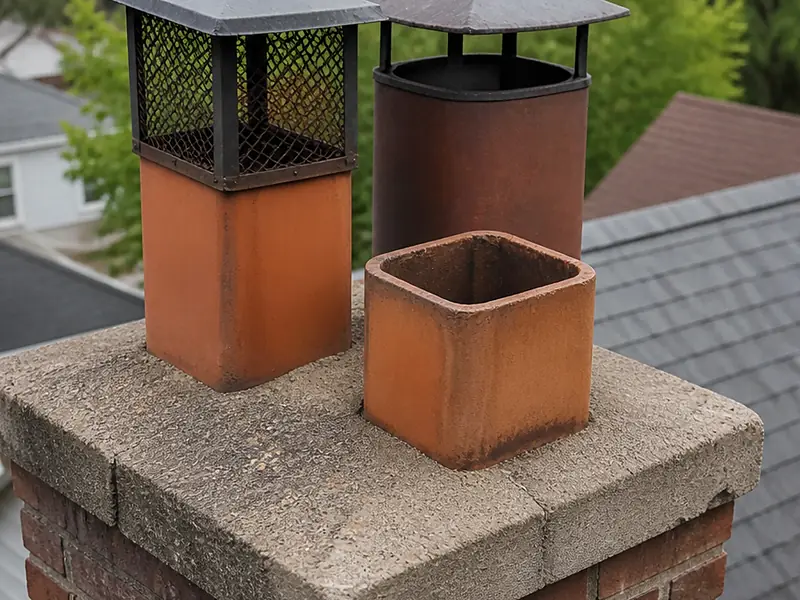
Chimney cap and crown repair protects the part of the chimney that takes the worst of the weather. The crown is the concrete or stone slab that seals the top of the masonry around the flue; the cap is the metal hood and screen that sits above the flue opening. In Bernardsville, both face repeated freeze-thaw cycles every winter, snow that sits on the crown for days on the higher ground, and a steady rain of leaves, twigs and acorns from surrounding trees.
Many crowns were never built correctly in the first place. A thin layer of mortar troweled over the top bricks, sometimes called a mortar wash, cracks within a few winters and lets water straight into the chimney. Once water is inside, it rusts dampers, stains ceilings and breaks down mortar joints from within. Fixing the top is one of the most cost-effective ways to protect the whole chimney, which is why 1stCall Emergency Chimney checks the cap and crown on every chimney inspection.
Crown Repair Versus Crown Replacement
Hairline cracks in an otherwise sound crown can be cleaned out and sealed with a flexible crown coating that bridges small gaps and moves with the masonry through the temperature swings of a Somerset Hills winter. That is a good option when caught early. When the crown is crumbling, has wide cracks, or was built as a thin mortar wash, we remove it and form a new one.
A properly built crown is cast from concrete, slopes away from the flue, and overhangs the brick or stone on all sides with a drip edge, so water falls clear of the chimney face instead of running down it. We leave a small expansion gap between the crown and the flue tiles so the flue can expand when hot without cracking the crown. Some of the large stone chimneys on Bernardsville Mountain finish in cut-stone caps rather than concrete, and we repair or reset those to match the original.
Chimney Caps That Keep Out Raccoons, Squirrels and Birds
With Bernardsville's woods and fields and New Jersey Audubon's nearly 300-acre Scherman Hoffman Wildlife Sanctuary close by, wildlife is part of daily life, and an open flue looks like a hollow tree to many animals. Raccoons den on smoke shelves in spring, squirrels fall in and cannot climb back out, and birds build nests that block the flue. All of them bring debris, odors and parasites, and a blocked flue can push carbon monoxide back into the house.
A well-built cap with sturdy mesh prevents all of that. If an animal is already inside, we remove it humanely, clean out the nesting material and then cap the flue. One exception deserves mention: chimney swifts, small migratory birds that nest inside chimneys in summer, are protected under the Migratory Bird Treaty Act. An active swift nest cannot legally be disturbed, so we wait until the young have left, then clean and cap the chimney.
Custom Caps for Multi-Flue Estate Chimneys
Single-flue caps from a home center fit a standard clay tile. They rarely fit the chimneys on older Somerset Hills country houses, where one large stack may hold several flues of different sizes, or where flue tiles project at different heights. For those chimneys we measure and fit a cap that covers every flue at once, in stainless steel or copper. Copper weathers to a soft brown and eventually a green patina that suits stone and older brick, while stainless steel keeps a clean, bright look.
A cap that covers the whole crown also shields it from rain and snow, extending the life of the crown underneath. On chimneys with a boiler or furnace flue, we make sure the cap design and screen size suit that appliance, since soot from oil-fired equipment can clog fine mesh. Some homeowners pair a new cap with a top-sealing damper, and our fireplace and damper repair team can fit both in one visit.
Storm-Damaged Caps and Crowns
High winds and falling limbs regularly knock caps off chimneys in the Somerset Hills. When the EF-1 tornado of June 2023 crossed Bernardsville, it snapped trees onto the rail line, roads and at least one home, and chimney tops are often the first thing a falling limb hits. A missing cap leaves the flue open to rain and animals, and a limb strike can crack a crown in ways you cannot see from the ground.
After any storm that brings branches down near your roof, look at the chimney top with binoculars. If the cap is gone, bent or tilted, or if you find debris in the gutters that looks like concrete, call us. We can install a temporary cover quickly and schedule a permanent cap or crown repair once the weather settles, and our emergency chimney service is available around the clock for serious damage.